For many people, coffee and caffeine are almost inseparable. The familiar morning cup is expected to deliver both flavor and stimulation. Açaí Coffee challenges that assumption.
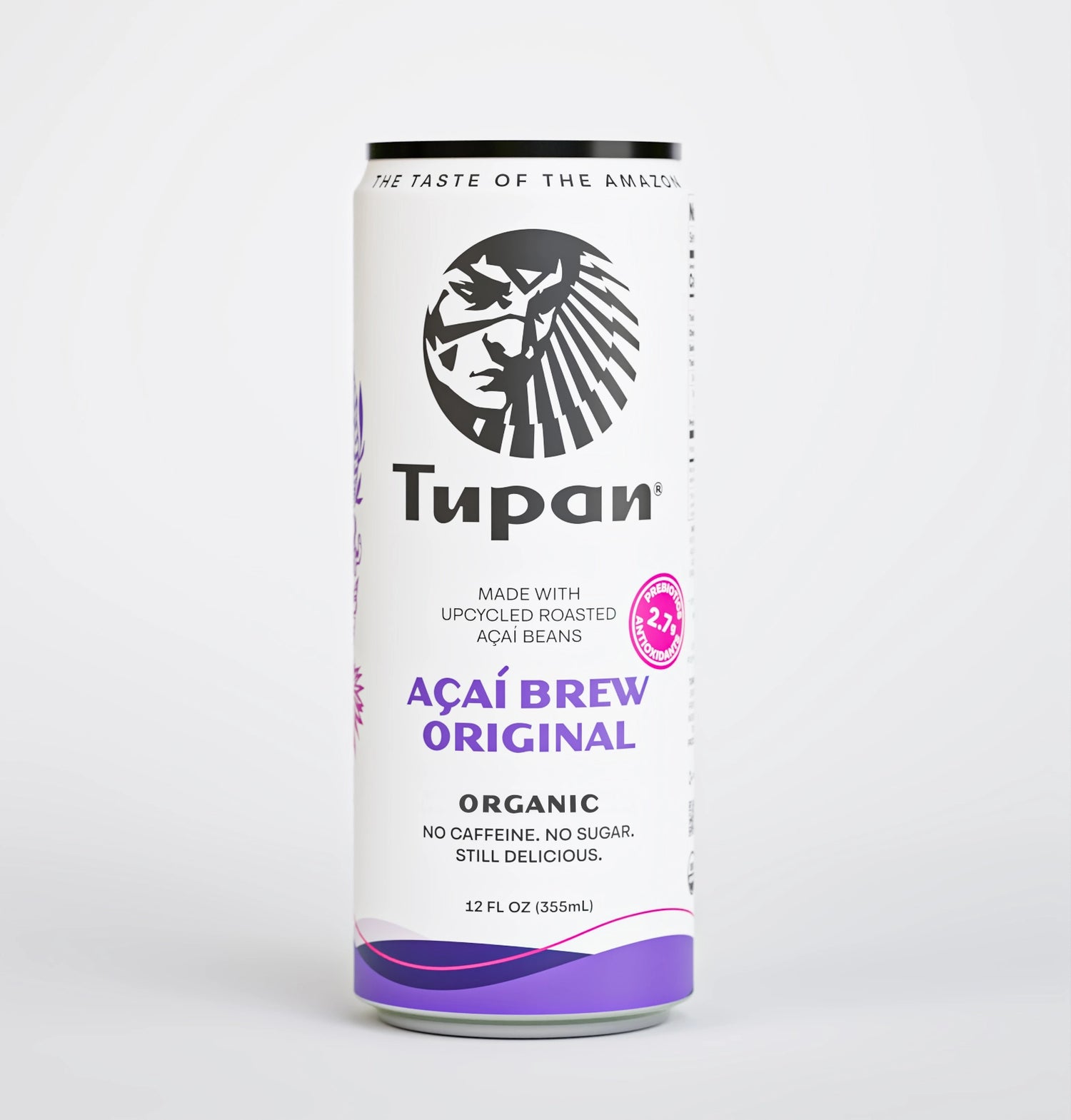
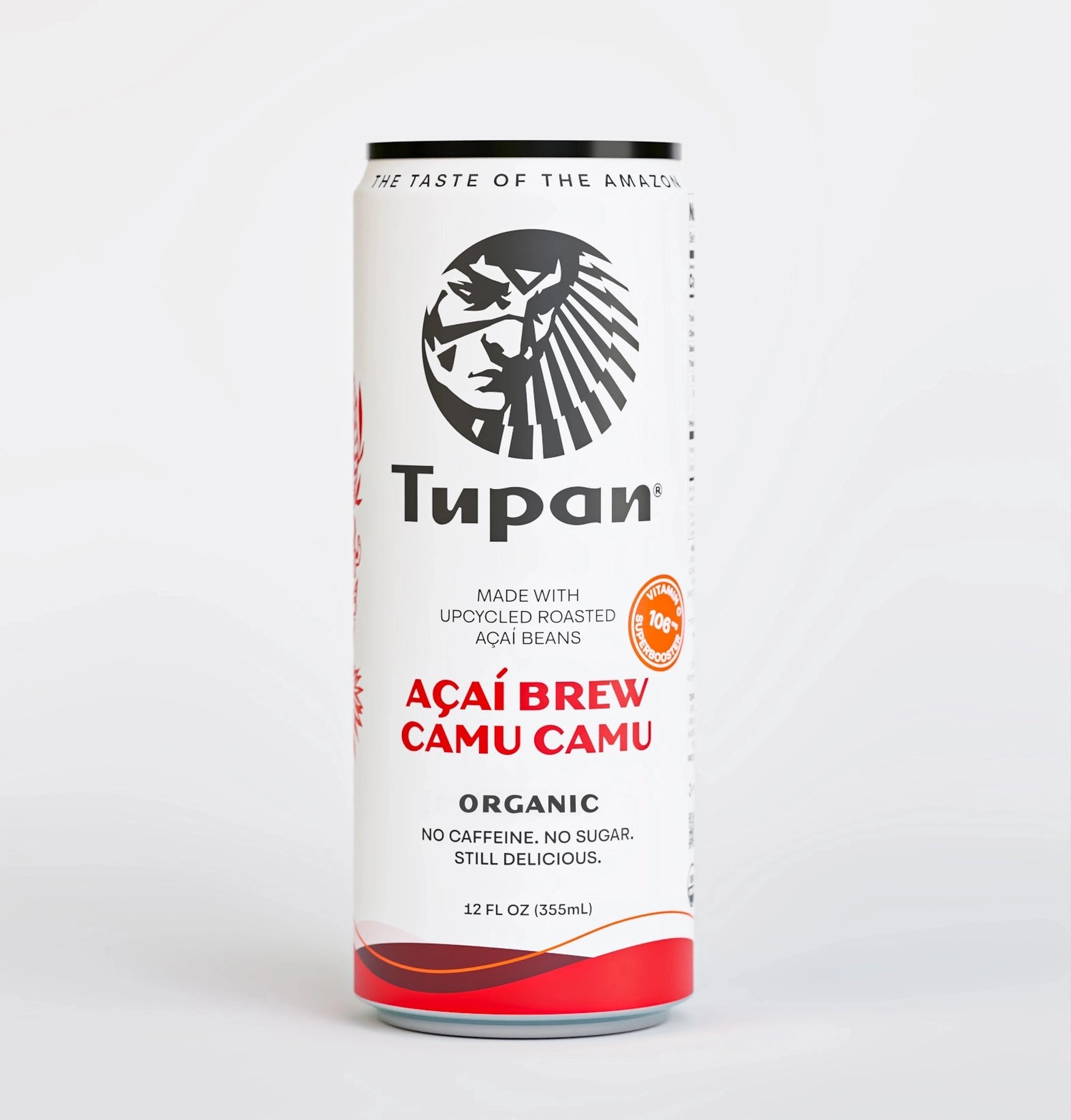
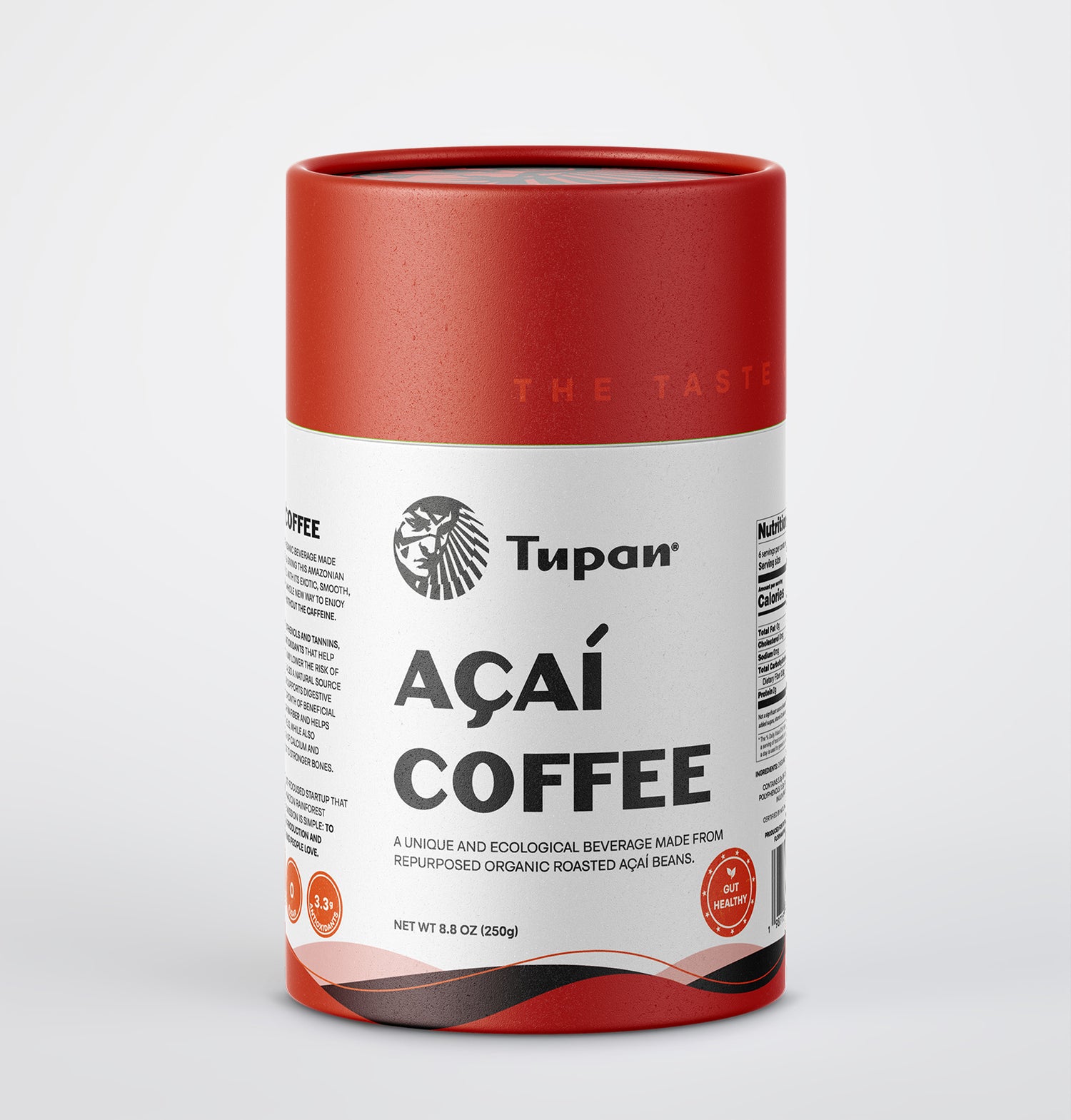
Açaí Coffee is made from roasted and ground açaí seeds, not from coffee beans. That distinction changes much more than the ingredient list. Scientific studies investigating beverages prepared from roasted açaí seeds describe them as caffeine-free coffee alternatives, opening a different category for people who enjoy the ritual and roasted character of coffee-style beverages without seeking caffeine.
The simplest answer is therefore yes: Açaí Coffee made exclusively from roasted açaí seeds is naturally caffeine-free. But understanding why requires looking at what Açaí Coffee actually is, where caffeine in conventional coffee comes from, and why “caffeine-free” is fundamentally different from “decaffeinated.”
WHY AÇAÍ COFFEE IS NATURALLY CAFFEINE-FREE
Traditional coffee comes from seeds of plants belonging to the genus Coffea, including species such as Coffea arabica and Coffea canephora. Those seeds naturally contain caffeine.
Açaí Coffee comes from a different plant entirely: the Amazonian açaí palm, Euterpe oleracea. After the fruit pulp is removed, the large seed that makes up most of the fruit can be recovered, processed, roasted and ground to produce a coffee-style beverage.
Roasting does not turn an açaí seed into a coffee bean, and the word “coffee” in Açaí Coffee describes the preparation concept and drinking experience rather than the botanical identity of the ingredient.
This distinction is central to understanding the category. Açaí Coffee does not begin as caffeinated coffee and then have caffeine removed. The raw material itself is different.
For a broader introduction to the ingredient, history, production, flavor, sustainability and science behind the category, explore The Ultimate Guide to Açaí Coffee.
CAFFEINE-FREE IS NOT THE SAME AS DECAF
This is one of the most important distinctions for consumers.
Decaffeinated coffee begins as conventional coffee. Because coffee beans naturally contain caffeine, manufacturers use processing methods designed to remove most of it. Decaf therefore remains coffee from a Coffea plant, only with its caffeine content substantially reduced.
A naturally caffeine-free beverage follows a different logic. Its ingredient does not rely on a decaffeination step to create the caffeine-free proposition.
Açaí Coffee belongs to this second model. When the product is made only from roasted açaí seeds and no caffeinated ingredients are added, there is no conventional coffee bean that needs to undergo decaffeination.
That makes Açaí Coffee conceptually different from decaf before the beverage even reaches the cup.
WHAT DOES SCIENCE SAY ABOUT CAFFEINE IN ROASTED AÇAÍ SEED BEVERAGES?
Research on roasted açaí seed beverages is still emerging, which is expected for a relatively new food category. However, recent peer-reviewed studies explicitly describe roasted açaí seed beverages as caffeine-free coffee substitutes or alternatives.
A 2025 study published in Foods investigated roasted açaí seed powder as a coffee substitute, examining extraction conditions, phenolic compounds, antioxidant capacity and behavior during simulated digestion. The researchers characterized roasted açaí seed extract as a caffeine-free coffee substitute and reported measurable phenolic and antioxidant properties in the beverage.
Another 2025 study published in Molecular Nutrition & Food Research examined commercial roasted açaí seed beverages from different regions of Brazil. The researchers likewise described the product as a caffeine-free beverage and evaluated its phenolic profile, antioxidant behavior and cytoprotective potential after simulated gastrointestinal digestion.
Research published in 2026 has continued investigating how roasting conditions influence açaí seed composition, including phenolic compounds, antioxidant capacity, inulin and volatile compounds responsible for aroma development.
These studies are important because they move discussion of roasted açaí seed beverages beyond novelty. Scientists are beginning to characterize the ingredient, the effects of roasting, the resulting beverage and its chemical composition in considerably greater detail.
DOES AÇAÍ COFFEE GIVE YOU ENERGY?
The word “energy” can mean different things, so this question needs precision.
Caffeine is a stimulant. A caffeine-free beverage should not be expected to reproduce caffeine’s pharmacological stimulant effect simply because it is roasted, dark or consumed in a coffee-like ritual.
Açaí Coffee can still provide the sensory experience associated with a warm roasted beverage: aroma, flavor, preparation ritual and the behavioral cue of having a morning or afternoon cup. Those characteristics may make it feel familiar to coffee drinkers, but they should not be confused with a caffeine-driven stimulant effect.
HOW DOES AÇAÍ COFFEE COMPARE WITH REGULAR COFFEE?
The two beverages can occupy similar moments in a consumer’s routine while remaining fundamentally different products.
Regular coffee is produced from roasted coffee beans and naturally contains caffeine. Açaí Coffee is produced from roasted açaí seeds and is naturally caffeine-free. Their botanical origins, chemical profiles and flavor architectures are therefore different.
They can also share sensory territory. Roasting creates complex aromas and flavors through thermal reactions, which is one reason roasted ingredients beyond coffee can develop notes consumers associate with toast, nuts, cocoa, caramel, wood or other deep roasted characteristics.
Açaí Coffee should therefore not be understood as an imitation that succeeds only when it tastes exactly like Arabica or Robusta. It is better understood as its own roasted beverage category with a familiar preparation format.
HOW DOES AÇAÍ COFFEE COMPARE WITH DECAF?
For someone choosing between Açaí Coffee and decaf, the most useful distinction is not simply the amount of caffeine. It is the origin of the beverage.
Decaf preserves conventional coffee as its starting material. Its flavor, aroma and chemistry originate from coffee beans, followed by a process that removes most of their caffeine.
Açaí Coffee starts with açaí seeds. Its flavor is created through the characteristics of that seed and the way it is processed, roasted, ground and brewed.
Someone who wants the closest possible version of conventional coffee with much less caffeine may prefer decaf. Someone interested in a naturally caffeine-free roasted beverage made from an Amazonian ingredient may find Açaí Coffee more compelling.
CAN YOU DRINK AÇAÍ COFFEE AT NIGHT?

The absence of caffeine changes when a roasted beverage can fit into a daily routine.
Many coffee drinkers restrict conventional coffee later in the day because caffeine can interfere with sleep, particularly in caffeine-sensitive individuals. A beverage made solely from roasted açaí seeds does not introduce caffeine from coffee beans.
That makes Açaí Coffee relevant not only as a morning beverage but also as an afternoon or evening option for people who want a roasted cup without intentionally consuming caffeine.
Individual products should still be checked for additional ingredients. A blend containing coffee, tea, guarana, yerba mate or another caffeine source would obviously have a different caffeine profile from a product made exclusively from roasted açaí seeds.
IS AÇAÍ COFFEE A GOOD OPTION FOR PEOPLE TRYING TO REDUCE CAFFEINE?
Potentially, yes.
Reducing caffeine can be difficult partly because coffee consumption is not only about caffeine. It is also behavioral and sensory. Grinding, brewing, holding a warm cup, smelling roasted aromas and taking a break around a beverage are all parts of the ritual.
A naturally caffeine-free roasted beverage can preserve more of that ritual than simply removing the cup altogether.
That does not mean Açaí Coffee should be presented as a treatment for caffeine dependence, withdrawal or any medical condition. It means that, from a practical consumer perspective, it provides another beverage choice for people who want to moderate caffeine while maintaining a coffee-style ritual.
WHAT ELSE IS FOUND IN ROASTED AÇAÍ SEEDS?
The absence of caffeine is only one part of the story.
Scientific research has identified phenolic compounds in roasted açaí seed beverages and investigated their antioxidant behavior. Researchers have reported compounds including chlorogenic acids and other phenolic markers, while studies of açaí seeds have also examined tannins, catechins and related bioactive compounds.
Research has additionally drawn attention to the fiber composition of açaí seeds. Inulin, a soluble dietary fiber associated with prebiotic functionality, has been reported in studies examining açaí seed composition and the effects of roasting.
The exact chemical composition of a finished beverage can vary substantially according to seed origin, processing, roasting conditions, grind size, brewing ratio, water temperature and extraction method. For that reason, findings from scientific studies should not automatically be interpreted as exact nutritional values for every commercial Açaí Coffee product.
WHY THE AÇAÍ SEED MATTERS BEYOND CAFFEINE
Açaí is globally recognized for its dark purple pulp, yet the pulp represents only a relatively small fraction of the fruit. The seed accounts for most of its physical mass and is generated in enormous quantities wherever açaí pulp is processed.
That creates an unusual opportunity.
Instead of treating the seed only as a processing by-product, it can become a raw material. Drying, preparing and roasting the seed transforms an underused part of the fruit into a new food product with economic value.
This is where Açaí Coffee connects two trends that are often discussed separately: demand for caffeine-free beverage choices and the development of upcycled foods.
The result is not merely “coffee without caffeine.” It is a different ingredient entering the roasted beverage space through a circular use of the açaí fruit.
IS AÇAÍ COFFEE ACTUALLY COFFEE?
Botanically, no.
If “coffee” is used strictly to mean a beverage made from seeds of Coffea species, Açaí Coffee is not conventional coffee. It is a roasted açaí seed beverage.
In consumer language, however, names such as grain coffee, mushroom coffee, chicory coffee and other coffee alternatives have long been used to communicate a preparation style, sensory reference or consumption occasion.
The most accurate way to understand Açaí Coffee is therefore straightforward: it is a coffee-style beverage made by roasting and grinding the seed of the açaí fruit.
WHAT DOES A CAFFEINE-FREE AÇAÍ COFFEE TASTE LIKE?
Caffeine does not define the entire flavor of coffee, and removing caffeine from the conversation does not mean removing complexity from the cup.
The sensory profile of Açaí Coffee depends heavily on the seed, processing method and roast. Roasting conditions can alter volatile compounds and therefore influence aroma and flavor development.
A well-produced cup may present roasted, nutty, earthy, woody, caramelized or cocoa-like notes, but there is no single universal flavor profile for every roasted açaí seed product.
HOW SHOULD AÇAÍ COFFEE BE BREWED?
Preparation depends on the roast, grind and format of the specific product. Water temperature, coffee-to-water ratio, extraction time and filtration method can all affect the final cup.
Recent research on roasted açaí seed extract has specifically investigated hot-water extraction and found that preparation conditions influence the recovery of phenolic compounds.
Consumers should therefore follow the brewing instructions supplied with the product rather than assuming that every Açaí Coffee should use exactly the same recipe as conventional coffee.
A NEW CATEGORY, NOT JUST A SUBSTITUTE
Calling Açaí Coffee a coffee alternative is useful because it immediately tells consumers where the beverage can fit. But the description becomes limiting if “alternative” is interpreted as a product whose only purpose is to imitate something else.
Açaí Coffee has its own botanical origin, supply chain, flavor potential and sustainability story. Its naturally caffeine-free character is one advantage, but it is not the entire proposition.
THE BOTTOM LINE
Açaí Coffee made exclusively from roasted açaí seeds is naturally caffeine-free because it does not come from caffeinated coffee beans and does not require a decaffeination process.
Scientific research now describes roasted açaí seed beverages as caffeine-free coffee alternatives while investigating their phenolic compounds, antioxidant properties, roasting behavior and functional potential. At the same time, research remains young, and broader clinical claims would go beyond the evidence currently available.
What is already clear is more fundamental: roasting the seed of the Amazonian açaí fruit can create a distinctive beverage that occupies familiar coffee moments without simply being another version of coffee.
Want the complete story, from the Amazonian fruit and seed to roasting, brewing, nutrition, sustainability and flavor? Read The Ultimate Guide to Açaí Coffee.
Sources: 1. Silva, A. M. O. et al. “Investigating Roasted Açaí (Euterpe oleracea) Seed Powder as a Coffee Substitute: Effects of Water Temperature, Milk Addition, and In Vitro Digestion on Phenolic Content and Antioxidant Capacity.” Foods, 2025, 14(15), 2696. DOI: 10.3390/foods14152696 2. da Silva, L. R. et al. “Upcycled Beverage From Roasted Açaí (Euterpe oleracea) Seeds: Antioxidant Capacity and Cytoprotection Through Gastrointestinal Simulation.” Molecular Nutrition & Food Research, 2025, 69(23), e70270. DOI: 10.1002/mnfr.70270 3. Pereira et al. “Roasting-Induced Changes in Bioactive Compounds and Volatile Profile of Açaí (Euterpe oleracea) Seeds Powder Assessed by Response Surface Methodology and Principal Components Analysis.” Journal of Food Biochemistry, 2026. DOI: 10.1155/jfbc/6623391