INTRODUCCIÓN: EL AMAZONAS, LA RESERVA FRUTÍCOLA MÁS GRANDE DE LA TIERRA
La selva amazónica es el reservorio de frutas más grande y diverso del planeta, con miles de especies comestibles, muchas de ellas aún indocumentadas. Estas frutas no solo son tesoros culturales, sino también potencias nutricionales, que ofrecen vitaminas, fibras, antioxidantes y compuestos vegetales que la ciencia continúa estudiando. Para las comunidades indígenas, las frutas siempre han sido tanto alimento como medicina, un vínculo directo entre la cultura y la supervivencia. En este artículo, destacaremos 30 de las frutas amazónicas más importantes, proporcionando detalles sobre sus nutrientes, historia cultural y beneficios para la salud. Este contenido fundamental conecta la biodiversidad con las tendencias globales de bienestar y explica por qué las frutas amazónicas están dando forma al futuro de las bebidas funcionales.
LA CIENCIA DE LAS FRUTAS AMAZÓNICAS
Durante siglos, las frutas amazónicas fueron consumidas principalmente por poblaciones locales e indígenas, a menudo denominadas "farmacias del bosque". Hoy, la ciencia confirma lo que el conocimiento tradicional ha comprendido durante mucho tiempo: estas frutas contienen niveles extremadamente altos de vitamina C, carotenoides, polifenoles y fibras prebióticas. Contribuyen a la salud intestinal, la inmunidad, la resiliencia cardiovascular e incluso la claridad mental. Es importante destacar que, si bien algunas de estas especies son exclusivas del Amazonas, otras como el cacao y el guaraná se han extendido globalmente; sin embargo, su origen botánico está profundamente arraigado en la selva tropical. Los investigadores ahora reconocen las frutas amazónicas como respuestas naturales a las tendencias globales de bienestar: nutrición de etiqueta limpia, compuestos antienvejecimiento, fibras prebióticas para el equilibrio intestinal y antioxidantes de origen vegetal que rivalizan o superan a superalimentos famosos como los arándanos o las bayas de goji.
⭢ AÇAÍ: LA POTENCIA ANTIOXIDANTE
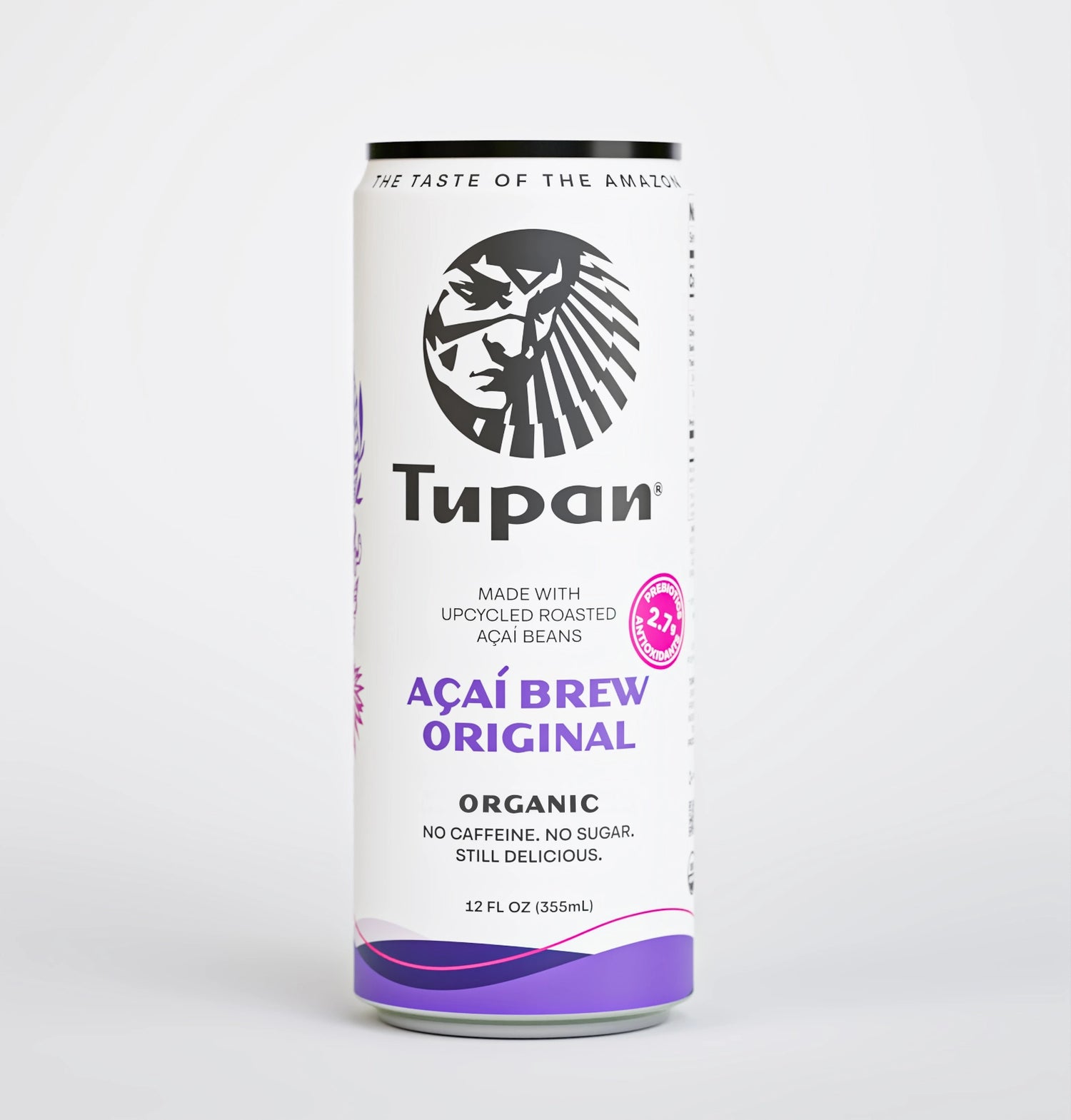
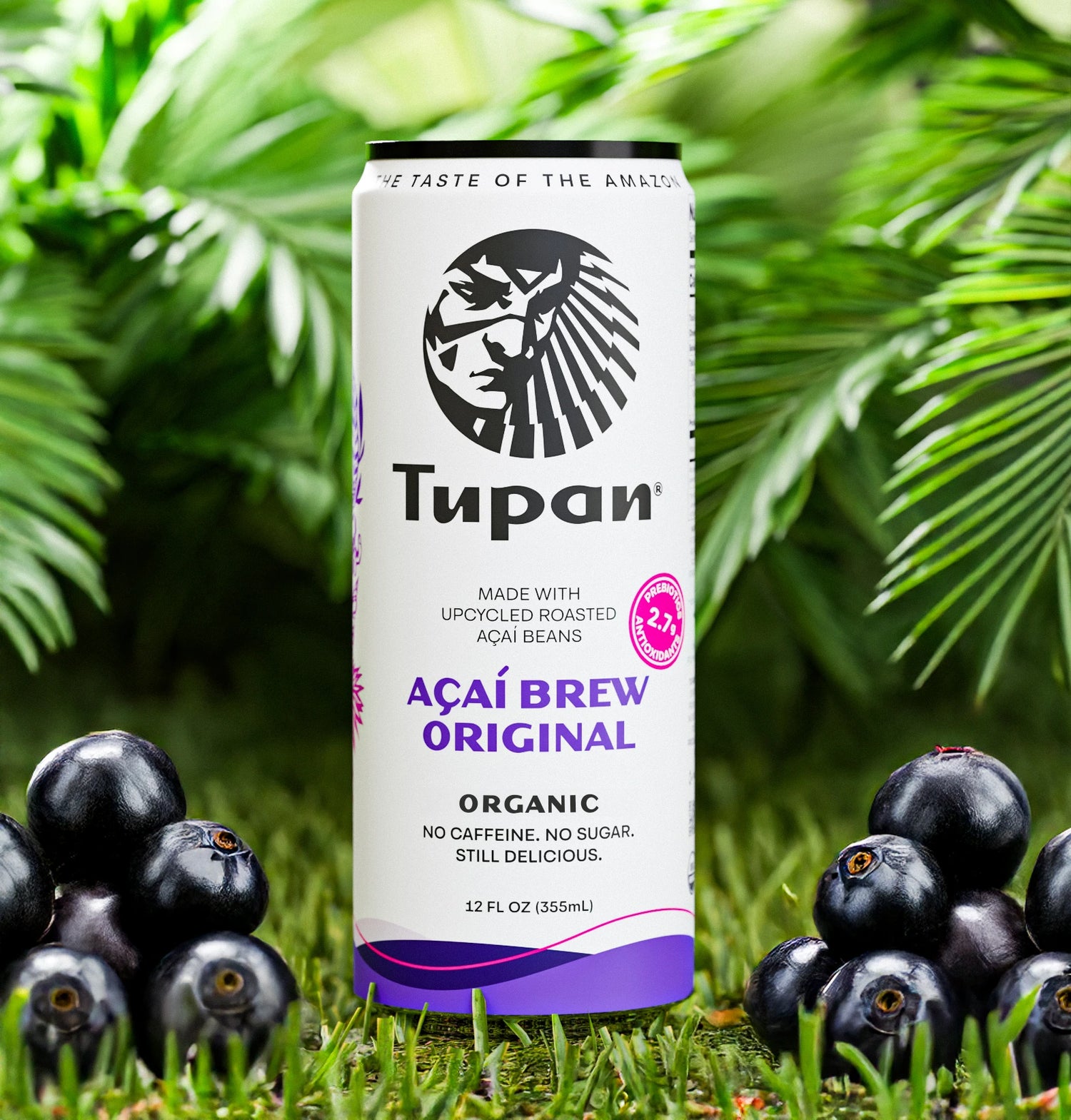
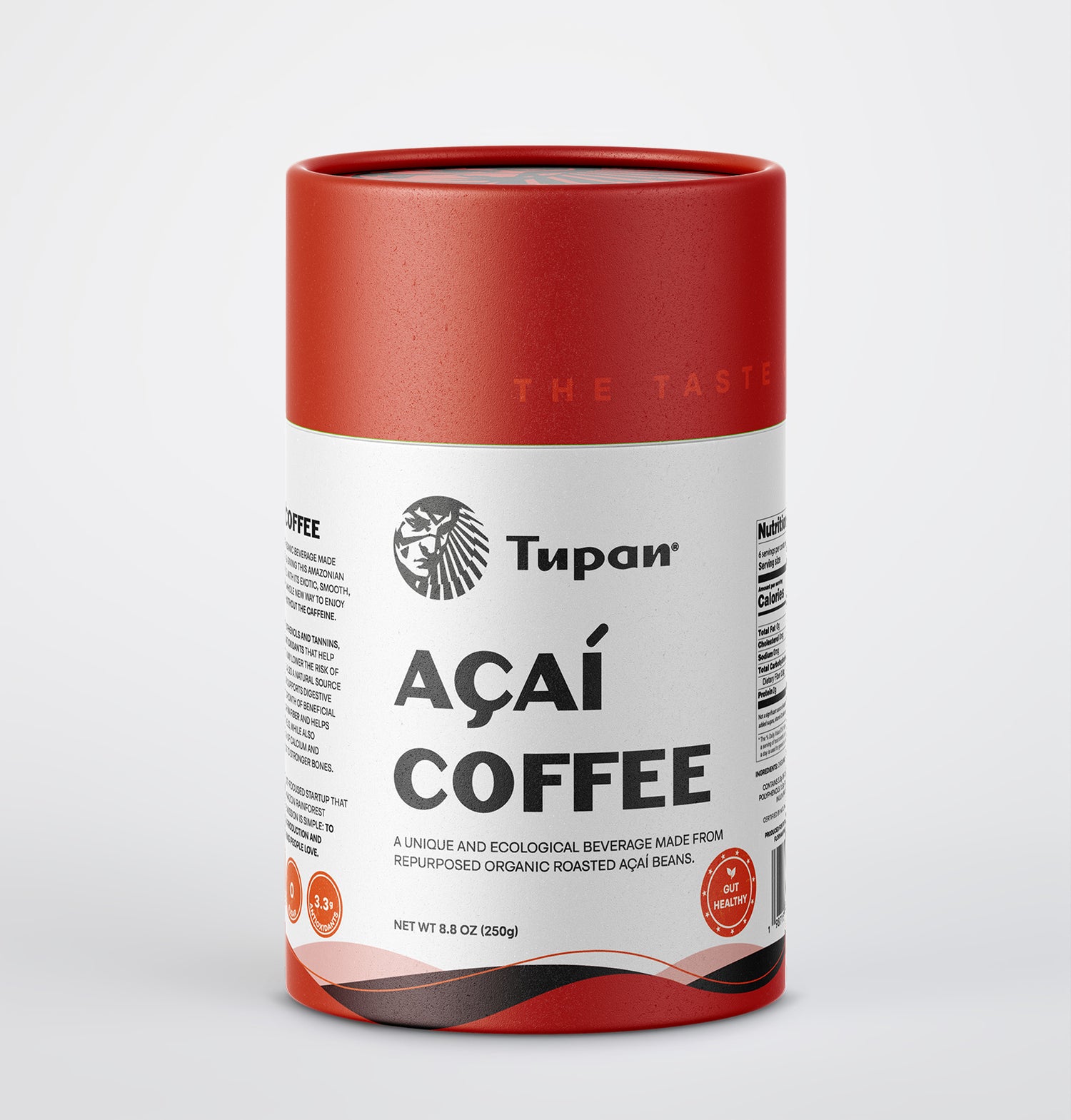
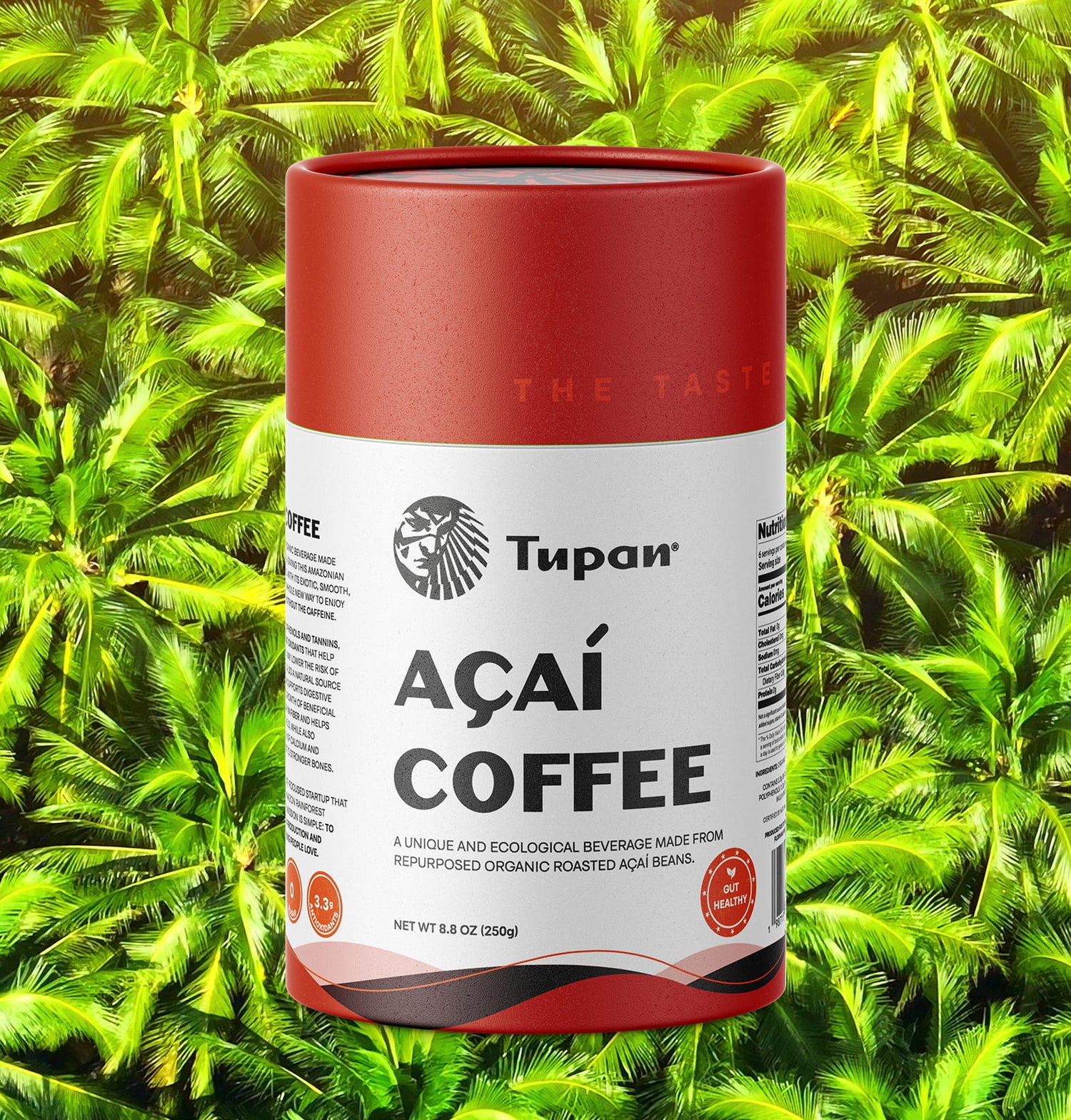
El açaí es quizás la fruta amazónica más famosa. Rico en antocianinas, polifenoles, ácidos grasos omega-6 y omega-9, y fibra, se ha convertido en un ícono internacional del bienestar. A diferencia de la mayoría de las frutas, el açaí proporciona ácidos grasos esenciales, lo que lo hace único en el reino vegetal. Estudios científicos muestran que sus antocianinas mejoran la salud cardiovascular y reducen el estrés oxidativo. Tupan lleva esta fruta más allá al reutilizar los granos de açaí descartados en Café de Açaí y Bebidas de Açaí. Esto evita el desperdicio al tiempo que proporciona fibra prebiótica y antioxidantes, creando una bebida que apoya la salud intestinal y el abastecimiento sostenible.
⭢ CAMU CAMU: EL SUPERFRUTO DE VITAMINA C

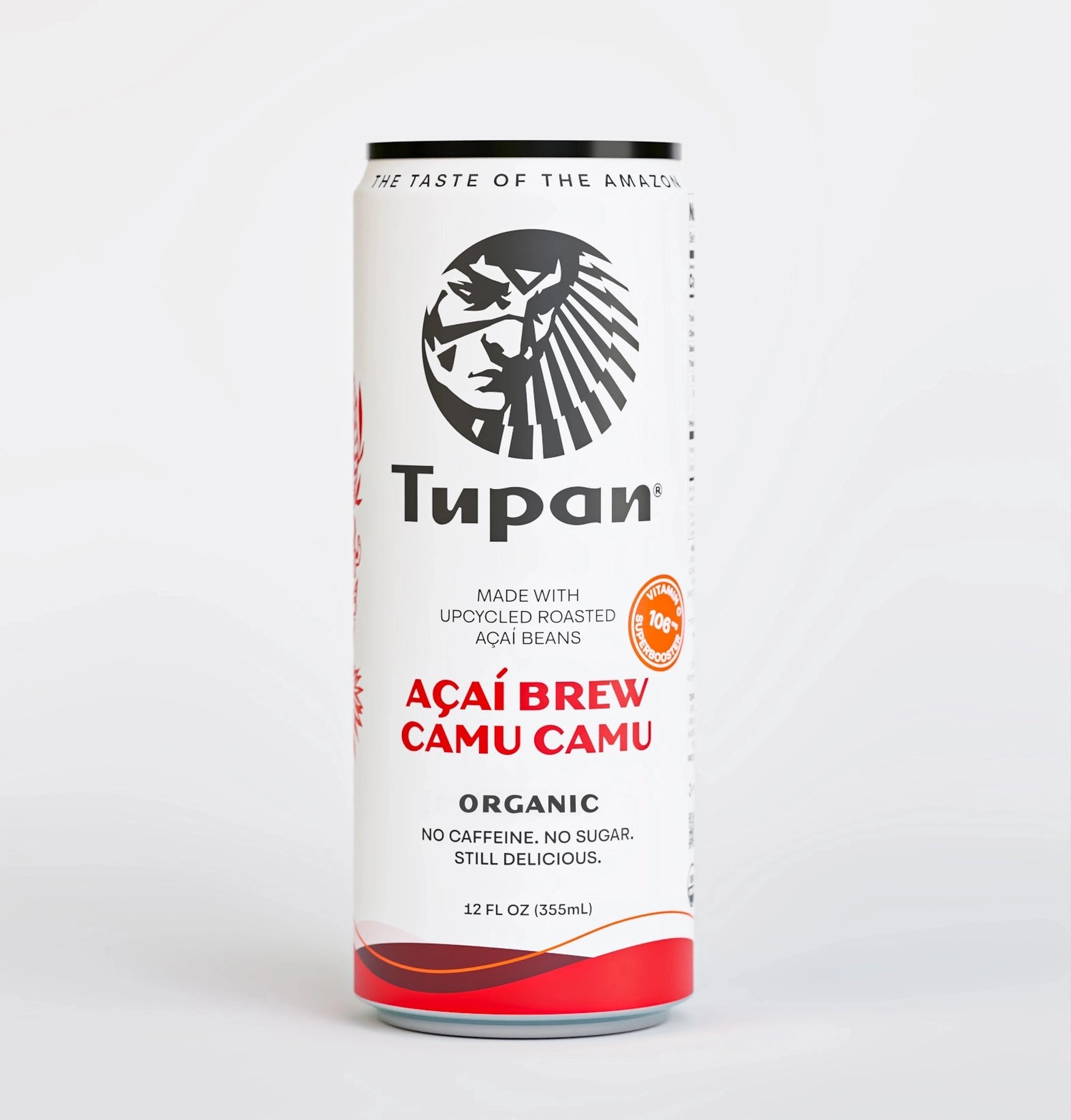
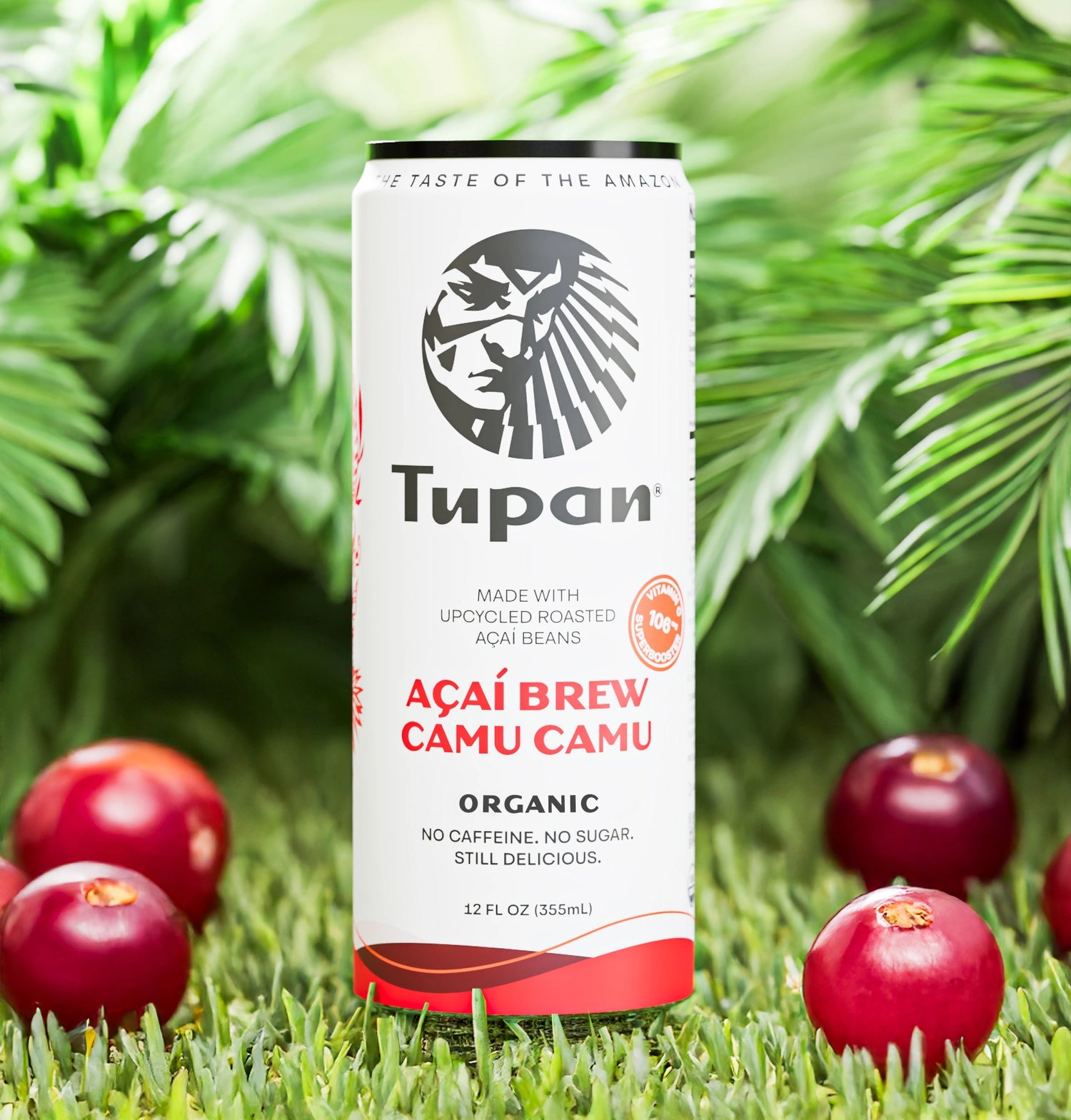
El camu camu contiene de 30 a 60 veces más vitamina C que una naranja, lo que lo convierte en la fuente natural más concentrada de este nutriente vital. Apoya la inmunidad, la salud de la piel, la producción de colágeno y el metabolismo energético. La investigación muestra que el camu camu también contiene ácido elágico y antocianinas, amplificando su poder antioxidante. Tupan incorpora camu camu en su Bebida de Açaí Camu Camu, proporcionando energía limpia y apoyo intestinal en cada lata. Para las comunidades en el Amazonas, el camu camu siempre ha sido más que alimento: es medicina, resiliencia y supervivencia durante la escasez estacional.
⭢ CUPUAÇU: EL CHOCOLATE AMAZÓNICO
El cupuaçu es un pariente cercano del cacao, celebrado por su pulpa cremosa y su aroma similar al chocolate. Contiene teobromina, flavonoides y ácidos grasos esenciales que mejoran la circulación, la elasticidad de la piel y el equilibrio energético. Culturalmente, es fundamental en los postres y cosméticos amazónicos. Los investigadores han descubierto que la manteca de cupuaçu hidrata la piel de manera más efectiva que la manteca de cacao, lo que explica su creciente popularidad en el cuidado de la piel. Nutricionalmente, el cupuaçu aporta vitaminas B y magnesio, vitales para el metabolismo energético.
⭢ BURITI: EL ÁRBOL DE LA VIDA
El buriti es venerado como el "árbol de la vida" en la cultura amazónica. Sus frutos de color rojo anaranjado se encuentran entre las fuentes naturales más ricas de betacaroteno (provitamina A). La vitamina A es fundamental para la salud ocular, la renovación de la piel y la inmunidad. El aceite de buriti, extraído de su pulpa, se utiliza tanto en dietas locales como en el cuidado natural de la piel. Su densidad de carotenoides es mayor que la de las zanahorias, lo que lo convierte en un verdadero superfruto. Las comunidades a menudo usan el buriti como alimento y como medicina tópica, uniendo nutrición y curación.
⭢ BACABA: EL PRIMO POCO CONOCIDO DEL AÇAÍ
La bacaba se asemeja al açaí pero tiene un sabor más rico y a nuez. Proporciona grasas insaturadas, antioxidantes y proteínas, ofreciendo beneficios intestinales y cardiovasculares. Tradicionalmente, las bebidas de bacaba se preparan de manera muy similar a los tazones de açaí, pero siguen siendo menos comercializadas fuera de Brasil. Nutricionalmente, la bacaba ofrece vitamina E y polifenoles, que combaten el estrés oxidativo. Los científicos ahora están estudiando su potencial para reducir el colesterol y mejorar el equilibrio energético.
⭢ GUARANÁ: ENERGÍA NATURAL
Las semillas de guaraná son famosas en todo el mundo por su contenido de cafeína, casi el doble que el de los granos de café. Pero a diferencia de la cafeína sintética, la matriz natural del guaraná proporciona una liberación más lenta, lo que lleva a un enfoque sostenido sin nerviosismo. Más allá de la cafeína, el guaraná proporciona antioxidantes como catequinas y taninos, protegiendo las células del estrés oxidativo. En el Amazonas, el guaraná es tanto un estimulante ritual como una bebida diaria, un puente cultural que combina tradición con rendimiento.
⭢ GRAVIOLA (GUANÁBANA): REFORZADOR DE LA INMUNIDAD
La graviola, o guanábana, tiene una piel verde con espinas y una pulpa cremosa rica en vitamina C, potasio y fibra dietética. Tradicionalmente utilizada para apoyar la inmunidad y la digestión, también se estudia por sus acetogeninas bioactivas, compuestos con posibles propiedades antiinflamatorias. Su sabor refrescante lo convierte en un elemento básico para jugos y dulces. Nutricionalmente, la graviola fortalece la inmunidad y contribuye a una mejor función intestinal.
⭢ TAPEREBÁ (CAJÁ): UNA FUENTE REFRESCANTE DE VITAMINA C
El taperebá, también llamado cajá, es una fruta de color amarillo brillante que aporta vitamina C, calcio y hierro. Conocido por su sabor agrio y refrescante, a menudo se consume como jugo en los climas cálidos del Amazonas. La vitamina C apoya la inmunidad, mientras que el calcio y el hierro fortalecen los huesos y la sangre. Su pulpa también es una de las favoritas en helados y mermeladas regionales, destacando su versatilidad culinaria.
⭢ PUPUNHA (PALMA DE PEACH): UNA FUENTE DE PROTEÍNA VEGETAL
La pupunha, o palma de melocotón, ha sido un alimento básico en las dietas amazónicas durante mucho tiempo. Su pulpa almidonada es rica en carbohidratos, vitamina A, proteínas y minerales como el fósforo. La pupunha a menudo se hierve y se come con sal, funcionando como un refrigerio y como un carbohidrato básico. Nutricionalmente, proporciona energía sostenida y micronutrientes vitales para la resiliencia diaria.
⭢ TUCUMÃ: EL AGUACATE AMAZÓNICO
La pulpa anaranjada del tucumã es densa en carotenoides y grasas saludables, lo que le valió el apodo de "aguacate amazónico". Rico en vitamina A, carotenoides y ácidos grasos esenciales, apoya la salud de la piel, la visión y el metabolismo energético. En las ciudades amazónicas, el tucumã es un desayuno favorito, a menudo servido en sándwiches con queso, lo que lo convierte en un símbolo de la vida diaria y la nutrición.
⭢ ARAÇÁ: LA GUAYABA SILVESTRE
El araçá está estrechamente relacionado con la guayaba pero tiene un sabor más ácido. Contiene altos niveles de vitamina C, antioxidantes y polifenoles. Utilizado en jugos y mermeladas, apoya la inmunidad y combate el estrés oxidativo. El araçá es una fruta que demuestra la biodiversidad del Amazonas, mostrando cómo incluso las frutas menos conocidas proporcionan una nutrición notable.
⭢ MURICI: AROMÁTICO Y NUTRITIVO
El murici tiene un fuerte aroma a queso pero es valorado por su nutrición. Contiene hierro, calcio, fósforo y antioxidantes. A menudo mezclado en batidos, el murici agrega nutrientes y complejidad de sabor. Las tradiciones locales ven el murici como un alimento que fortalece los huesos y aumenta la energía, lo que lo hace culinario y medicinal.
⭢ BACURI: CREMOSO Y NUTRITIVO
La pulpa cremosa del bacuri es una fuente de fósforo, calcio y vitaminas B. Ampliamente utilizado en dulces, mermeladas y helados, el bacuri es una fruta tanto nutritiva como indulgente. Sus nutrientes fortalecen los huesos, los músculos y el metabolismo energético. Los investigadores están comenzando a explorar los compuestos vegetales únicos del bacuri por su potencial antioxidante.
⭢ UXI: RICO EN ANTIOXIDANTES Y FIBRA
El uxi es rico en vitamina C, vitamina E y fibra. Usado localmente en jugos y gachas, contribuye a la salud intestinal, la vitalidad de la piel y la inmunidad. Densamente nutritivo pero poco investigado, el uxi representa el potencial sin explotar de la biodiversidad amazónica. Las comunidades lo valoran como alimento diario y como fruta del patrimonio cultural.
⭢ JENIPAPO: FRUTA MEDICINAL TRADICIONAL
El jenipapo se ha utilizado en la medicina amazónica durante siglos. Su contenido de hierro, calcio y fósforo apoya la salud de la sangre y la energía. La fruta también se usa para producir tintes naturales, lo que la vincula con la identidad cultural. Nutricionalmente, es una fruta densa en energía que apoya la resistencia y la recuperación, uniendo alimento y tradición.
⭢ JATOBÁ: LA FRUTA DE LANGOSTA AMAZÓNICA
Las vainas de jatobá contienen pulpa en polvo rica en vitamina C, fósforo y calcio. Conocido por apoyar la salud respiratoria, el jatobá se consume tradicionalmente para fortalecer la resistencia. También se utiliza en remedios naturales contra la fatiga. Hoy en día, los nutricionistas reconocen su combinación de fibra y micronutrientes como valiosa para las dietas modernas.
⭢ ABIU: DULCE Y ATERCIOPELADO
El abiu es una fruta amarilla con pulpa suave y dulce. Proporciona vitamina A, vitamina C, hierro y fósforo. Su textura aterciopelada lo convierte en una fruta de postre favorita, mientras que sus nutrientes apoyan la inmunidad, la salud de la piel y la energía. El abiu destaca la riqueza del Amazonas tanto en sabor como en nutrición.
⭢ CACAO: LA FUENTE DEL CHOCOLATE
El cacao, nativo del Amazonas, es la base del chocolate. Contiene flavonoides, magnesio y teobromina. Los estudios confirman la capacidad del cacao para mejorar la salud cardiovascular, el estado de ánimo y el rendimiento cognitivo. Más allá del chocolate, la pulpa de cacao se utiliza cada vez más en bebidas, destacando su doble valor como tradición e innovación.
⭢ INAJÁ: UNA FRUTA RICA EN ACEITE
El inajá es valorado por su pulpa rica en aceite, que contiene grasas insaturadas, hierro y antioxidantes. Se utiliza en la cocina y como fuente de energía local. Nutricionalmente, el inajá aporta grasas saludables que apoyan la salud del corazón y proporcionan energía densa. Su resiliencia como cultivo también lo hace importante para la agricultura amazónica.
⭢ CASTAÑA-DO-PARÁ (NUEZ DE BRASIL): LA FUENTE DE SELENIO
Las nueces de Brasil son mundialmente famosas por su contenido de selenio. Solo una nuez puede proporcionar más del 100% de la ingesta diaria recomendada. El selenio apoya la salud de la tiroides, la inmunidad y la defensa antioxidante. Combinadas con proteínas y grasas saludables, las nueces de Brasil representan un alimento funcional casi perfecto, que equilibra macronutrientes y oligominerales.
⭢ MAPATI: BERRY ANTIOXIDANTE
El mapati es una pequeña baya que contiene vitamina C y polifenoles. Tradicionalmente consumido como jugo, apoya la inmunidad y reduce la inflamación. Aunque menos comercializado, el mapati está ganando la atención de los investigadores por sus posibles compuestos antiinflamatorios y antioxidantes.
⭢ BIRIBÁ: CREMOSO Y DULCE
El biribá, también conocido como rollinia, es una fruta cremosa relacionada con la graviola. Rico en vitamina C y fibra dietética, el biribá apoya la digestión, la inmunidad y el equilibrio energético. Su pulpa similar a la crema pastelera se usa en dulces y bebidas, lo que lo hace nutritivo y delicioso.
⭢ COCONA: EL TOMATE AMAZÓNICO
La cocona es ácida y similar al tomate, rica en vitamina A, vitamina C y potasio. Apoya la salud cardiovascular, la vitalidad de la piel y la inmunidad. La cocona se usa comúnmente en salsas y jugos regionales, mostrando la diversidad culinaria del Amazonas, así como su nutrición.
⭢ INGÁ: LA FRUTA DE VAINA DULCE
El ingá produce vainas largas llenas de pulpa dulce y algodonosa. Es rico en proteínas, hierro y antioxidantes. Comúnmente comido fresco de la vaina, el ingá es tanto un refrigerio como una fuente de nutrición, que apoya la salud de la sangre y la energía diaria.
⭢ MARACUJÁ-DO-MATO (MARACUYÁ SILVESTRE)
El maracuyá silvestre proporciona vitamina C, fibra y compuestos vegetales calmantes. Al igual que el maracuyá cultivado, apoya la relajación, la digestión y la inmunidad. En el Amazonas, el maracuyá-do-mato también es valorado como una ayuda natural para dormir, mezclando nutrición con tradiciones de bienestar.
⭢ OITI: UNA FRUTA AMAZÓNICA TRADICIONAL
El oiti es rico en hierro y calcio. Aunque menos conocido fuera del bosque, se consume localmente por sus propiedades fortalecedoras. Nutricionalmente, el oiti contribuye a la salud ósea y la energía. Representa la diversidad oculta de las frutas amazónicas, muchas de las cuales permanecen sin descubrir a nivel mundial.
⭢ PIQUIÁ: LA FRUTA ENERGÉTICA
El piquiá es rico en proteínas y calcio. Su pulpa es densa y saciante, lo que lo convierte en una fuente de energía tradicional para las comunidades. Sus nutrientes fortalecen los huesos y los músculos, mientras que su valor cultural radica en su papel como alimento de sustento en tiempos difíciles.
EL IMPACTO ECONÓMICO Y CULTURAL DE LAS FRUTAS AMAZÓNICAS

Las frutas amazónicas no son solo nutrición, son economía, cultura y supervivencia. Las comunidades dependen de la recolección y procesamiento de frutas para su sustento. La demanda internacional de açaí y guaraná ha creado industrias multimillonarias, mientras que frutas menos conocidas como el bacuri y el uxi sostienen las economías locales. Equilibrar la comercialización con la sostenibilidad es esencial para proteger la biodiversidad y el patrimonio cultural.
FRUTAS AMAZÓNICAS Y EL FUTURO DE LAS BEBIDAS FUNCIONALES
La diversidad de las frutas amazónicas representa una gran oportunidad para el futuro del bienestar. Desde fibras prebióticas hasta antioxidantes, vitaminas y adaptógenos, estas frutas se alinean perfectamente con la demanda del consumidor de autenticidad, sostenibilidad y nutrición a base de plantas. Las bebidas funcionales son la plataforma ideal para estas frutas, ofreciendo a los consumidores globales un sabor del Amazonas con beneficios tangibles para la salud.
TUPAN: LLEVANDO LAS FRUTAS AMAZÓNICAS AL MUNDO
En Tupan, nos inspira la increíble biodiversidad del Amazonas. Al reutilizar los granos de açaí y destacar superfrutas como el camu camu, creamos bebidas funcionales que brindan salud intestinal, inmunidad y sostenibilidad. Nuestro Manifiesto explica nuestro propósito: llevar el Sabor del Amazonas al mundo con integridad e impacto.
CONCLUSIÓN: ÚNETE A LA REVOLUCIÓN DE LAS FRUTAS AMAZÓNICAS
Las frutas del Amazonas son más que sabores exóticos: son poderosas fuentes de nutrición, resiliencia y sostenibilidad. Al celebrar esta diversidad, honramos el bosque y las comunidades que lo protegen.