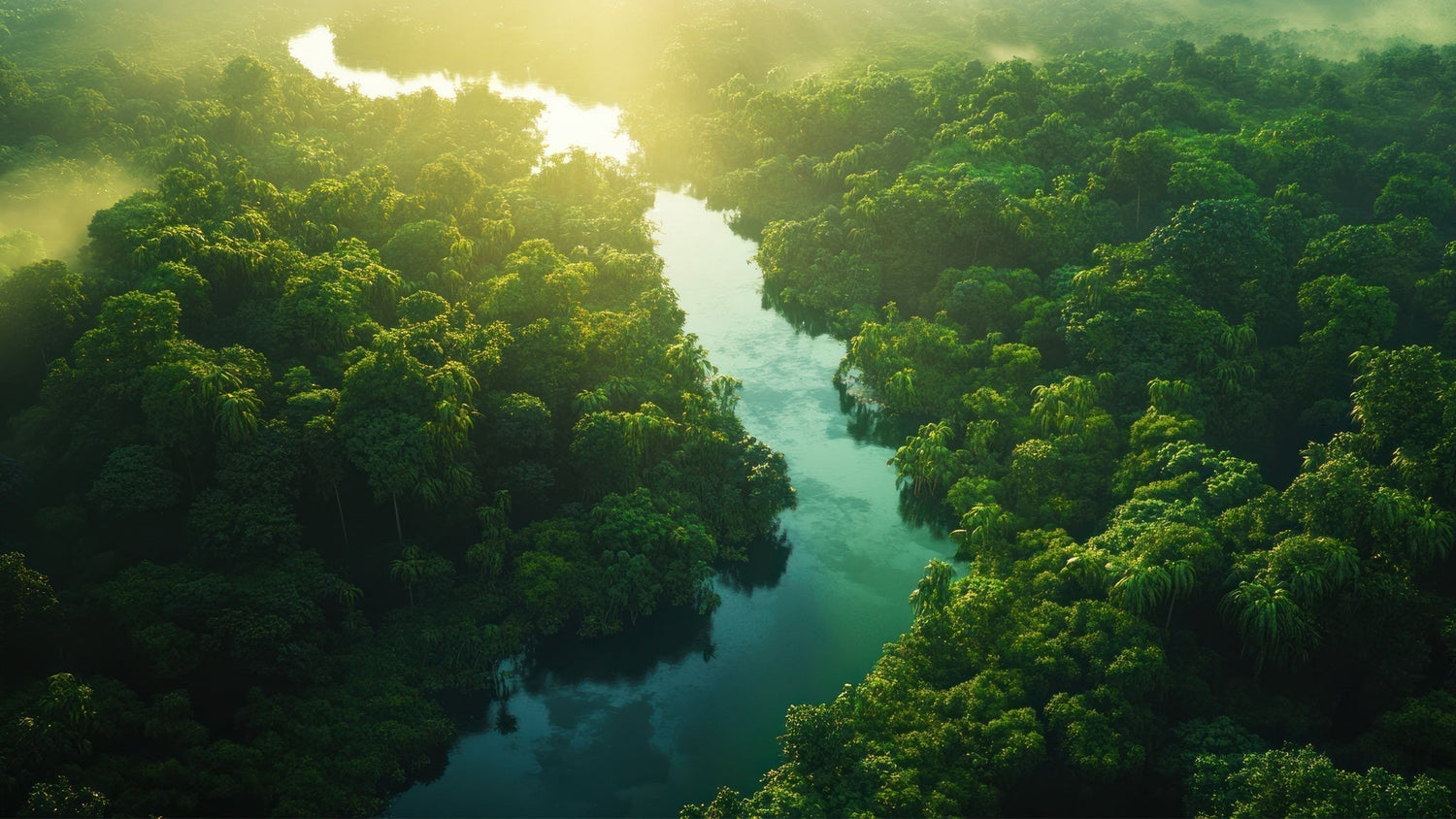
La Selva Amazónica a menudo se presenta como un desierto virgen, un lugar donde la naturaleza reina. Sin embargo, debajo de esta imagen popular se encuentran fuerzas complejas —tanto naturales como hechas por el hombre— que han estado dando forma a su destino durante milenios. Desde las profundas corrientes del Océano Atlántico que alteran sutilmente sus patrones de lluvia hasta las civilizaciones que alguna vez prosperaron y que ingeniaron la biodiversidad del bosque, la historia del Amazonas es de resiliencia, adaptación e innovación.
Este artículo se adentra en dos narrativas aparentemente no relacionadas pero profundamente conectadas. La primera examina la Circulación de Vuelco Meridional del Atlántico (AMOC, por sus siglas en inglés), un sistema masivo de corrientes oceánicas que ahora se entiende que juega un papel sorprendente en la estabilidad climática del Amazonas. La segunda explora los innovadores descubrimientos de ciudades perdidas y agricultura antigua debajo del dosel del bosque, revelados a través de la tecnología LiDAR de vanguardia. Juntas, estas historias ofrecen nuevas perspectivas sobre cómo las fuerzas pasadas y presentes pueden guiar el futuro de la selva tropical más grande del mundo.
EL SUTIL TEMBLOR DEL OCÉANO
La AMOC es una vasta red de corrientes atlánticas, a veces conocida como la "cinta transportadora oceánica". Mueve agua cálida y salada desde los trópicos hacia el Atlántico Norte, donde se enfría, se hunde y regresa hacia el sur en profundidad. Este proceso regula los patrones climáticos en todo el mundo.
Durante décadas, los científicos se centraron en cómo el Amazonas influye en el clima mundial, actuando como un sumidero masivo de carbono y generando lluvia a través de la evapotranspiración. Pero investigaciones recientes han cambiado el guion, revelando que lo contrario también es cierto: sistemas oceánicos lejanos como la AMOC pueden moldear el clima del Amazonas.
En un estudio de 2025, los investigadores encontraron que una AMOC debilitada —causada en parte por el derretimiento del hielo ártico— en realidad ha aumentado las lluvias en el sur del Amazonas durante la estación seca en casi un 4,8%. Esto compensó alrededor del 17% de la pérdida de lluvia desde 1982, un efecto estabilizador sorprendente. Si bien el debilitamiento de la AMOC está relacionado con preocupaciones climáticas globales, este beneficio regional destaca la interconexión de los sistemas de la Tierra.
El mecanismo es complejo: los cambios en la AMOC alteran las temperaturas de la superficie del mar en el Atlántico tropical, lo que a su vez desplaza la Zona de Convergencia Intertropical (ZCIT) e influye en la distribución de las lluvias. Para el Amazonas, incluso pequeños cambios pueden significar la diferencia entre una sequía severa y estaciones secas manejables.
Sin embargo, esto no es motivo de complacencia. El debilitamiento a largo plazo de la AMOC aún podría desencadenar graves interrupciones en los patrones climáticos de todo el mundo. Y si bien el reciente aumento de las lluvias en el sur del Amazonas es notable, otras partes de la selva tropical siguen siendo vulnerables a la sequía, la deforestación y los incendios.
Desde una perspectiva de sostenibilidad, comprender estas interacciones clima-océano es crucial. Sugiere que las estrategias de conservación para el Amazonas deben tener en cuenta no solo los impulsores locales como el uso de la tierra, sino también los procesos oceánicos distantes. Proteger la selva tropical no se trata solo de controlar la deforestación, se trata de comprometerse con la política climática global, la salud oceánica y la preservación del hielo polar.
CIUDADES BAJO EL DOSSEL
Durante siglos, la narrativa dominante sobre la historia humana del Amazonas fue la de tribus escasamente pobladas que vivían en armonía con un bosque virgen. Esta visión comenzó a cambiar a fines del siglo XX con el descubrimiento de terraplenes, geoglifos y suelos inusualmente fértiles conocidos como terra preta. Pero es en la última década que la transformación en nuestra comprensión ha sido más dramática.
La tecnología LiDAR (Light Detection and Ranging) ha revolucionado la arqueología en entornos forestales. Al enviar pulsos láser desde aeronaves y medir el tiempo que tardan en regresar, el LiDAR puede "ver" a través de la densa vegetación, revelando los contornos del suelo. En el Amazonas, esto ha revelado vastas redes de asentamientos, centros ceremoniales, caminos, canales y campos agrícolas ocultos durante siglos bajo el dosel.
Una de las revelaciones más sorprendentes es la existencia de "ciudades jardín", centros urbanos planificados integrados en una matriz de bosques y tierras de cultivo gestionados. Estos no eran los campamentos caóticos de sociedades de supervivencia, sino centros sofisticados con plazas, calzadas y sistemas de riego. Las estimaciones sugieren que algunas de estas ciudades sostenían a miles de habitantes.
Los sistemas agrícolas eran igualmente avanzados. En lugar de despejar grandes extensiones de bosque para monocultivos, los antiguos amazónicos practicaban la agrosilvicultura de policultivo, mezclando cultivos como maíz, yuca y frutas con especies forestales gestionadas. Enriquecían el suelo con carbón, huesos y desechos orgánicos para crear terra preta, que sigue siendo fértil incluso hoy en día. Este enfoque aumentó la biodiversidad, estabilizó la producción de alimentos y minimizó el impacto ambiental.
Estos hallazgos desafían suposiciones de larga data sobre el Amazonas como una selva "prístina". En cambio, pintan una imagen de un paisaje influenciado por el hombre, diseñado no a través de la dominación, sino a través de una relación simbiótica entre las personas y el bosque. Esto tiene profundas implicaciones para la sostenibilidad moderna. Sugiere que la biodiversidad del Amazonas no es únicamente un producto de la naturaleza virgen, sino también de la gestión humana.
Los conservacionistas modernos están comenzando a aprender lecciones de estas prácticas antiguas. La agrosilvicultura de policultivo y las técnicas de enriquecimiento del suelo podrían ayudar a restaurar tierras degradadas, aumentar la captura de carbono y mejorar la seguridad alimentaria en la región. Al mirar al pasado, podemos encontrar planos para un futuro más sostenible.
CONCLUSIÓN
El futuro del Amazonas está siendo moldeado por fuerzas tanto antiguas como modernas, locales y globales. La influencia sutil pero significativa de la AMOC en los patrones de lluvia subraya la profunda integración de la selva tropical en los sistemas planetarios. El redescubrimiento de ciudades perdidas y la agricultura sostenible nos recuerdan que el ingenio humano ha sido parte de la historia de este ecosistema durante mucho tiempo.
Juntas, estas narrativas sugieren una visión más amplia y más interconectada para la conservación del Amazonas, una que abarque tanto la ciencia de vanguardia como la sabiduría antigua. Para Tupan, cuya misión se basa en el espíritu del Amazonas, estas historias ofrecen tanto inspiración como responsabilidad: honrar el pasado, comprometerse con el presente y ayudar a dar forma a un futuro sostenible.
GUARDIANES DEL DOSSEL: COMUNIDADES AMAZÓNICAS AISLADAS Y EL EXPERIMENTO FORESTAL MÁS LARGO
En la inmensidad de la Selva Amazónica, las historias de resiliencia adoptan muchas formas. Algunas son humanas —comunidades que eligen el aislamiento para preservar su forma de vida y los ecosistemas que habitan—. Otras son ecológicas —esfuerzos científicos para comprender y proteger la capacidad del bosque para resistir el estrés ambiental—. Juntas, estas historias ofrecen una profunda visión de coexistencia y resistencia, recordándonos que el futuro del Amazonas depende tanto de la resiliencia cultural como ecológica.
COMUNIDADES AISLADAS: CUSTODIOS DE LA CULTURA Y LA BIODIVERSIDAD
En lo profundo del Amazonas, lejos del alcance de carreteras, mercados o electricidad, viven docenas de grupos indígenas que tienen poco o ningún contacto con el mundo exterior. Estos "pueblos aislados", reconocidos por la Fundação Nacional dos Povos Indígenas (FUNAI) de Brasil, no son reliquias del pasado sino comunidades dinámicas que toman decisiones conscientes de permanecer aparte.
Entre ellos se encuentra el pueblo Massaco, que habita los densos bosques del Parque Nacional Pacaás Novos en Rondônia. Avistados por primera vez en la década de 1980, han evitado consistentemente el contacto sostenido, señalando su intención de preservar su autonomía. Su caza, pesca y horticultura a pequeña escala están finamente ajustadas a los ritmos del bosque, asegurando un impacto ambiental mínimo.
La importancia de estas comunidades va más allá de la antropología. Los grupos aislados actúan como guardianes de vastos territorios, protegiendo indirectamente la biodiversidad al disuadir la tala ilegal, la minería y la apropiación de tierras. Imágenes satelitales y encuestas de campo confirman que las tierras indígenas, particularmente las ocupadas por grupos aislados, tienen algunas de las tasas de deforestación más bajas del Amazonas.
Sin embargo, estos guardianes enfrentan crecientes amenazas. Las incursiones ilegales de mineros y madereros, a menudo violentas, han aumentado en los últimos años. El cambio climático añade otra capa de vulnerabilidad, alterando los patrones de migración animal y los ciclos estacionales críticos para la subsistencia.
Las estrategias de protección requieren un delicado equilibrio. La ley brasileña reconoce el derecho de los pueblos aislados a permanecer sin contacto, y la FUNAI opera equipos especializados para monitorear sus territorios a distancia. Organizaciones no gubernamentales como Survival International abogan internacionalmente, presionando a los gobiernos para que hagan cumplir las protecciones. La tecnología también juega un papel: drones, monitoreo satelital y alertas de deforestación basadas en inteligencia artificial ayudan a rastrear y disuadir las invasiones sin intrusión física.
Sin embargo, el mayor desafío puede ser político. Los cambios en las prioridades gubernamentales pueden debilitar la aplicación de la ley y envalentonar a los actores ilegales. Mantener la autonomía y la seguridad de estas comunidades exige una vigilancia continua, marcos legales sólidos y el reconocimiento de que la diversidad cultural es tan esencial para la salud del Amazonas como su riqueza biológica.
CAXIUANÃ: LA SELVA BAJO EXPERIMENTO
Mientras que las comunidades aisladas encarnan la resiliencia cultural, la Floresta Nacional de Caxiuanã en Pará ha sido el escenario de un experimento ecológico histórico que prueba la resiliencia física del bosque. Desde 2001, científicos del Museo Paraense Emílio Goeldi y la Universidad de Leeds han estado llevando a cabo la simulación de sequía de bosques tropicales más larga del mundo.
El diseño es engañosamente simple: en una parcela de 1 hectárea, paneles de plástico transparente interceptan el 50% de la lluvia antes de que llegue al suelo, simulando condiciones de sequía prolongada. Una parcela de control cercana recibe lluvia normal. Durante 17 años de simulación de sequía, los investigadores documentaron cambios profundos. La mortalidad de árboles aumentó, particularmente entre las especies de dosel grandes, lo que llevó a una reducción del 40% en la biomasa. La parcela pasó de ser un sumidero de carbono a una fuente neta de carbono, liberando más CO2 del que absorbía.
La sequía también alteró la composición de las especies. Los árboles tolerantes a la sequía se volvieron más dominantes, mientras que las especies amantes de la humedad disminuyeron. Las lianas (enredaderas leñosas) proliferaron, estresando aún más los árboles sobrevivientes. Los niveles de humedad del suelo disminuyeron y las comunidades microbianas cambiaron de maneras que podrían afectar el ciclo de nutrientes durante décadas.
En 2024, se retiraron los paneles, marcando el inicio de una nueva fase: observar la recuperación del bosque. Las primeras señales son cautelosamente optimistas. La germinación de plántulas ha aumentado y algunas especies que estaban en declive están regresando. Sin embargo, la recuperación es lenta y el balance de carbono de la parcela sigue siendo negativo.
El experimento de Caxiuanã ofrece lecciones invaluables para la resiliencia climática. Primero, subraya que los bosques tropicales no son invencibles; la sequía prolongada puede empujarlos más allá de los puntos de inflexión ecológicos. Segundo, revela que la recuperación es posible, pero requiere tiempo, condiciones estables y la ausencia de factores estresantes adicionales como incendios o tala.
Para los responsables políticos, estos hallazgos resaltan la urgencia de mitigar el cambio climático para prevenir sequías más frecuentes y severas. Para los conservacionistas, ofrecen la esperanza de que incluso los bosques degradados pueden recuperarse si se les da la oportunidad.
CONCLUSIÓN
Desde la resiliencia humana de las comunidades aisladas hasta los conocimientos ecológicos de Caxiuanã, el Amazonas nos enseña que la resistencia es multifacética. Proteger la selva tropical significa salvaguardar tanto su patrimonio cultural como sus sistemas biológicos. Estas historias no son solo narrativas paralelas, están entrelazadas. Los bosques sanos sustentan a las comunidades aisladas, y la gestión de estas comunidades ayuda a mantener los bosques sanos.
Para Tupan, estas lecciones resuenan profundamente. Así como la marca transforma recursos pasados por alto en algo de valor, el Amazonas transforma la resiliencia —ya sea humana o ecológica— en un legado vivo. La tarea que tenemos por delante es asegurar que ambos puedan seguir prosperando, para beneficio del planeta y de todos los que dependen de él.
FUENTES
- FUNAI — directrices oficiales y monitoreo de pueblos aislados (Fundación Nacional de los Pueblos Indígenas de Brasil).
- Survival International — documentación y defensa de tribus no contactadas/aisladas en el Amazonas.
- Museu Paraense Emílio Goeldi & Universidad de Leeds — exclusión de la precipitación en Caxiuanã (experimento de sequía de bosques tropicales más largo del mundo).
- AP News — actualizaciones sobre la retirada de los paneles de exclusión de lluvia y el monitoreo de la recuperación en Caxiuanã.
- Investigación AMOC (2024–2025) — teleconexiones océano-selva tropical y lluvias de la estación seca en la Amazonía meridional.
- Arqueología LiDAR en el Amazonas — “ciudades jardín antiguas”, terra preta y paisajes ingenieriles indígenas (artículo de The Guardian y bibliografía académica de apoyo).