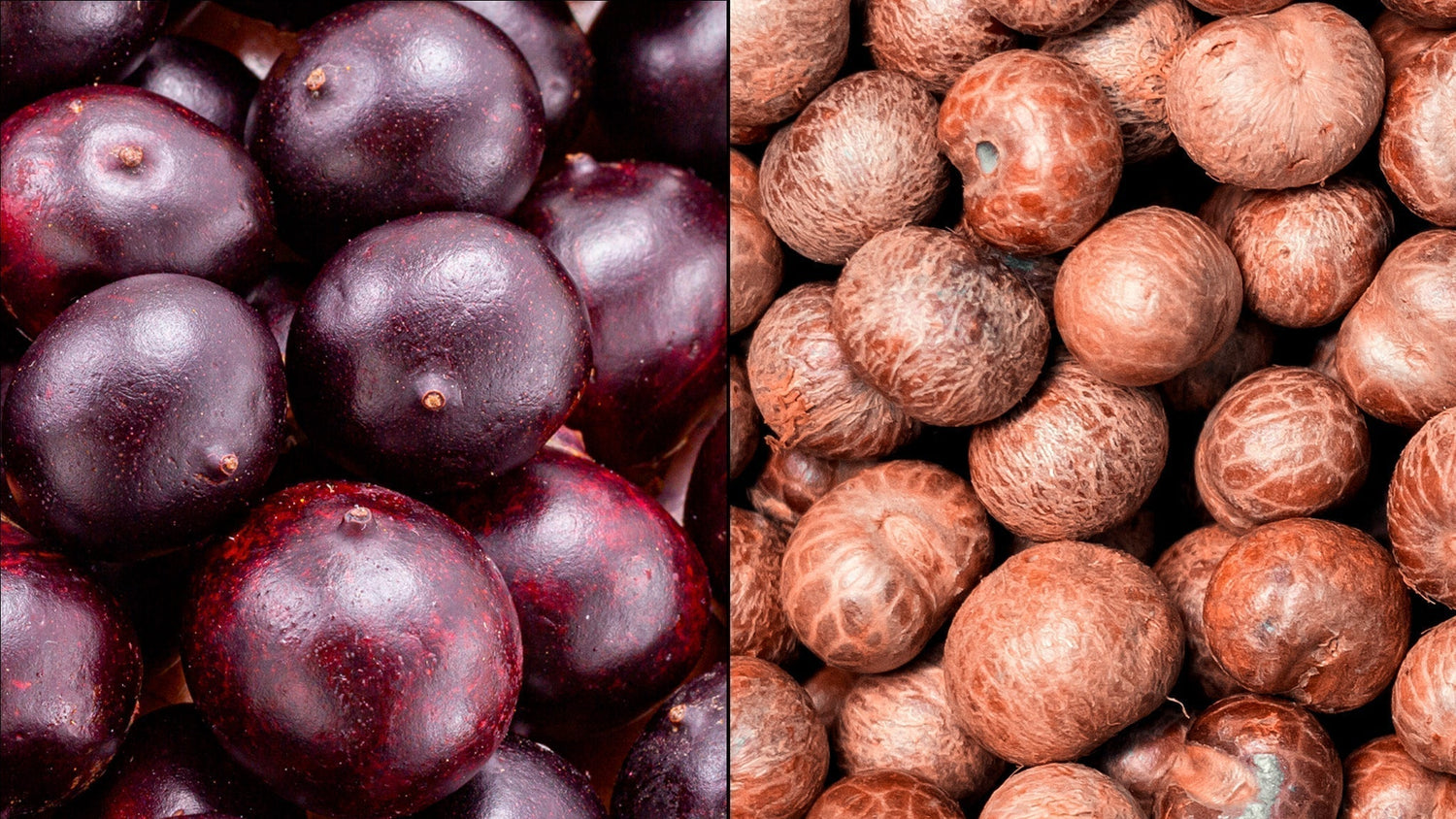
Todo el mundo habla de la pulpa de açaí.
La fruta de color púrpura intenso. El batido rico en antioxidantes. El superalimento global.
Pero casi nadie habla de lo que compone la mayor parte de la fruta en sí.
El grano de açaí.
En realidad, alrededor del 80 al 90 por ciento de cada baya de açaí no es pulpa, es la semilla interior, o lo que llamamos granos de açaí.
Durante décadas, estos granos han sido tratados como residuos.
Descartados, quemados o sin usar.
Pero la ciencia está empezando a revelar algo inesperado:
El grano de açaí no es solo un subproducto.
Es un ingrediente funcional fundamentalmente diferente.
Y comprender la diferencia entre la pulpa de açaí y los granos de açaí puede cambiar la forma en que pensamos sobre la nutrición, la sostenibilidad y el futuro de los alimentos.
¿CUÁL ES LA DIFERENCIA ENTRE LA PULPA DE AÇAÍ Y LOS GRANOS DE AÇAÍ?
A primera vista, ambos provienen de la misma fruta.
Pero nutricional y estructuralmente, son completamente diferentes.
Los granos de açaí, por otro lado, son el núcleo interno.
Densos. Fibrosos. Estructuralmente complejos.
Aunque la pulpa ha sido ampliamente consumida y estudiada, el grano ha permanecido en gran parte inexplorado hasta los últimos años.
Aquí es donde la ciencia comienza a descubrir una nueva capa de valor.
COMPOSICIÓN: LÍPIDOS VS. FIBRA
Una de las diferencias más importantes radica en su composición.
La pulpa de açaí contiene:
- Grasas saludables (lípidos)
- Antocianinas (pigmentos relacionados con la actividad antioxidante)
- Azúcares simples
Los granos de açaí contienen:
- Altos niveles de fibra dietética
- Polisacáridos estructurales
- Compuestos fenólicos ligados
Esta diferencia por sí sola cambia cómo interactúa cada uno con el cuerpo.
Mientras que la pulpa entrega nutrientes rápidamente, los granos operan de manera diferente: más lenta, más compleja y profundamente conectada con la digestión y el microbioma.
DIFERENCIAS CUANTITATIVAS: LO QUE MUESTRAN LOS ESTUDIOS
Los análisis científicos de los componentes de la fruta de açaí revelan claras diferencias cuantitativas entre la pulpa y los granos.
La pulpa de açaí típicamente contiene niveles más altos de lípidos, alcanzando aproximadamente el 30-50% de su peso seco, junto con concentraciones significativas de antocianinas, los compuestos responsables de su color púrpura intenso y su actividad antioxidante inmediata.
En contraste, los granos de açaí están compuestos predominantemente de fibra, que puede representar hasta el 70-80% de su estructura, junto con cantidades medibles de compuestos fenólicos que permanecen unidos dentro de esta matriz.
Aunque la actividad antioxidante total de la pulpa es a menudo más alta en ensayos directos, los estudios sugieren que los subproductos de açaí, incluidos los granos, retienen niveles relevantes de polifenoles con un comportamiento funcional distinto.
Esta diferencia no es solo cuantitativa.
Es funcional.
La pulpa entrega compuestos de acción rápida.
Los granos proporcionan una liberación más lenta, mediada por la fibra, interactuando de manera diferente con el cuerpo y el microbioma intestinal.
POLIFENOLES LIBRES VS. LIGADOS: UNA DIFERENCIA CRÍTICA
Una de las percepciones científicas más pasadas por alto sobre los granos de açaí es la presencia de polifenoles ligados.
Los polifenoles son compuestos vegetales conocidos por sus propiedades antioxidantes.
En la pulpa de açaí, muchos polifenoles se encuentran en forma libre.
Esto significa que están más inmediatamente disponibles.
En los granos de açaí, sin embargo, una parte significativa de los polifenoles está ligada a la fibra.
Esto cambia todo.
Los polifenoles ligados no se absorben de la misma manera.
En cambio, viajan a través del sistema digestivo e interactúan con las bacterias intestinales.
Esto crea un tipo diferente de efecto funcional:
- Liberación gradual
- Interacción con el microbioma
- Potencial sinergia prebiótica
Aquí es donde los granos de açaí comienzan a destacarse como un ingrediente de próxima generación.
LA CONEXIÓN CON EL MICROBIOMA INTESTINAL
La nutrición moderna se centra cada vez más en el intestino.
No solo la digestión, sino todo el ecosistema de microorganismos que influyen en la salud.
La fibra juega un papel central en este sistema.
Y los granos de açaí son naturalmente ricos en ella.
Cuando se combina con polifenoles ligados, esto crea una poderosa interacción:
La fibra alimenta a las bacterias beneficiosas.
Los polifenoles modulan su actividad.
Juntos, contribuyen a un ambiente interno más equilibrado.
Esto es fundamentalmente diferente de cómo se comportan las fuentes antioxidantes tradicionales.
No se trata solo de neutralizar los radicales libres.
Se trata de moldear los sistemas biológicos internos.
DE LA EXTRACCIÓN A LA FUNCIONALIDAD
El modelo alimentario tradicional siempre se ha basado en la extracción.
Tomar la parte más valiosa.
Descartar el resto.
En el caso del açaí, eso significaba centrarse en la pulpa e ignorar los granos.
Pero este modelo ya no es sostenible.
Ni ambientalmente.
Ni nutricionalmente.
Está surgiendo un nuevo enfoque, uno que considera todo el sistema.
Los granos de açaí representan este cambio.
No son solo una parte no utilizada de la fruta.
Son un recurso funcional sin explotar.
SOSTENIBILIDAD: EL COSTO OCULTO DE LA PULPA DE AÇAÍ
La demanda global de pulpa de açaí ha crecido rápidamente.
Pero con ella viene una consecuencia oculta:
Generación masiva de residuos.
Millones de toneladas de granos de açaí se desechan cada año en el Amazonas.
Esto crea presión ambiental y potencial económico perdido.
Por el contrario, el uso de granos de açaí transforma los residuos en valor.
Esta es la esencia del upcycling.
Y es uno de los movimientos más importantes en el futuro de la alimentación.
En lugar de extraer más de la naturaleza, empezamos a usar lo que ya existe.
Esto no es solo sostenibilidad.
Es eficiencia alineada con el equilibrio ecológico.
POTENCIAL FUNCIONAL: DOS CAMINOS DIFERENTES
La pulpa de açaí y los granos de açaí no son competidores.
Cumplen diferentes funciones.
La pulpa ofrece:
- Entrega inmediata de antioxidantes
- Sabor y atractivo visual
- Energía de lípidos naturales
Los granos ofrecen:
- Funcionalidad impulsada por la fibra
- Interacción con el microbioma
- Soporte metabólico a largo plazo
Juntos, representan dos dimensiones complementarias de la nutrición.
Pero históricamente, solo una ha sido explorada.
Eso está cambiando ahora.
DEL SUBPRODUCTO A LA INNOVACIÓN
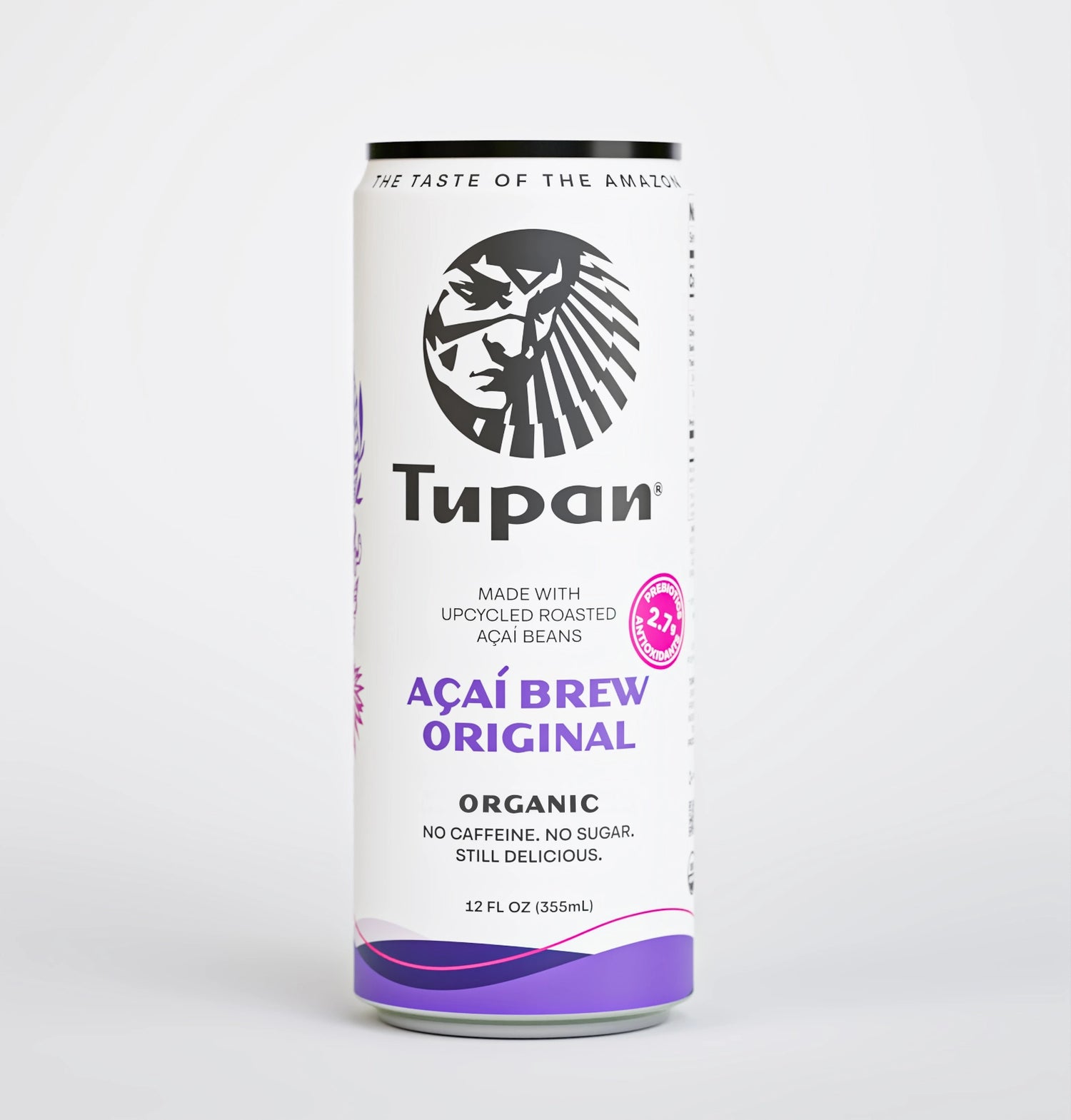
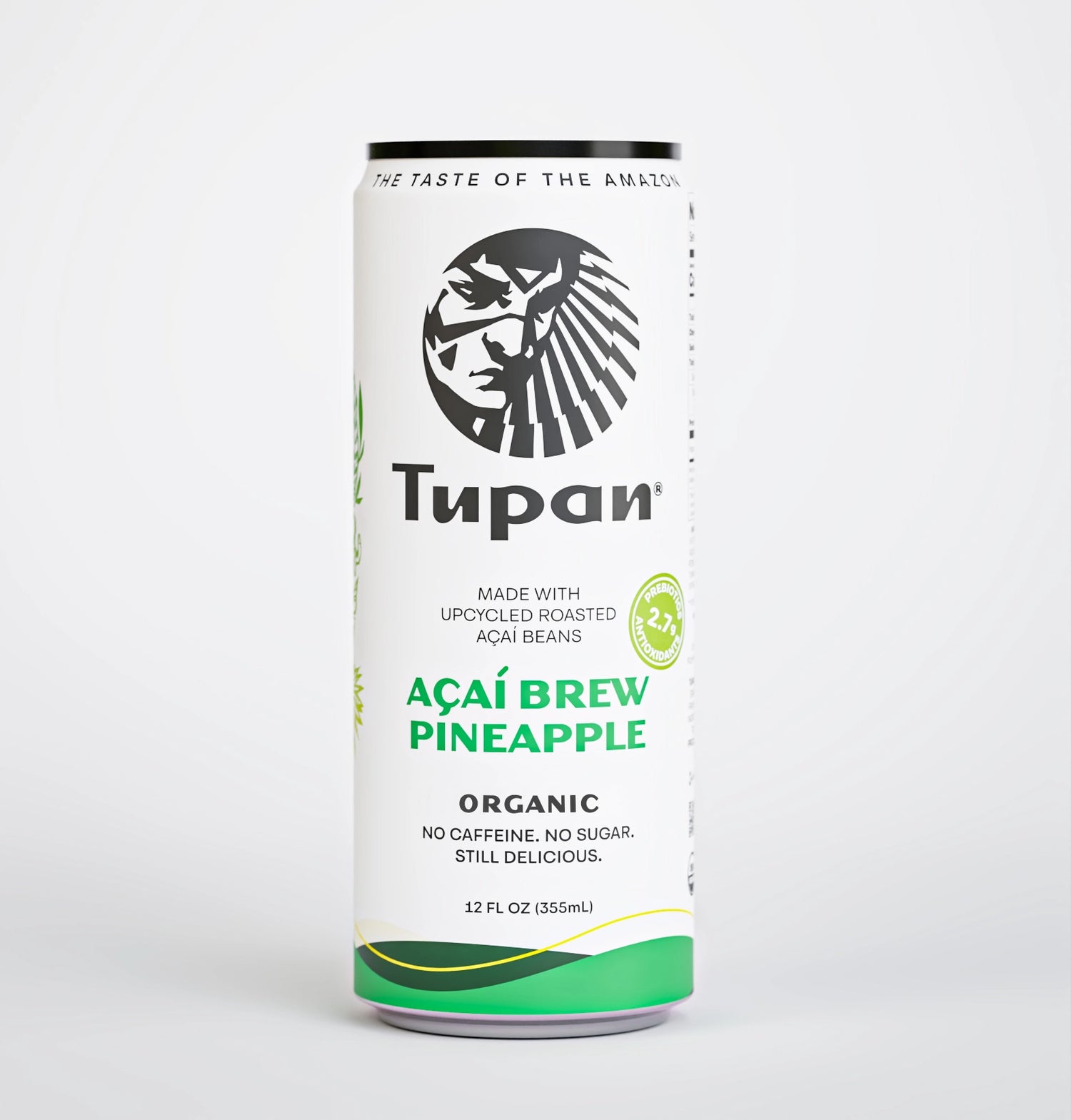
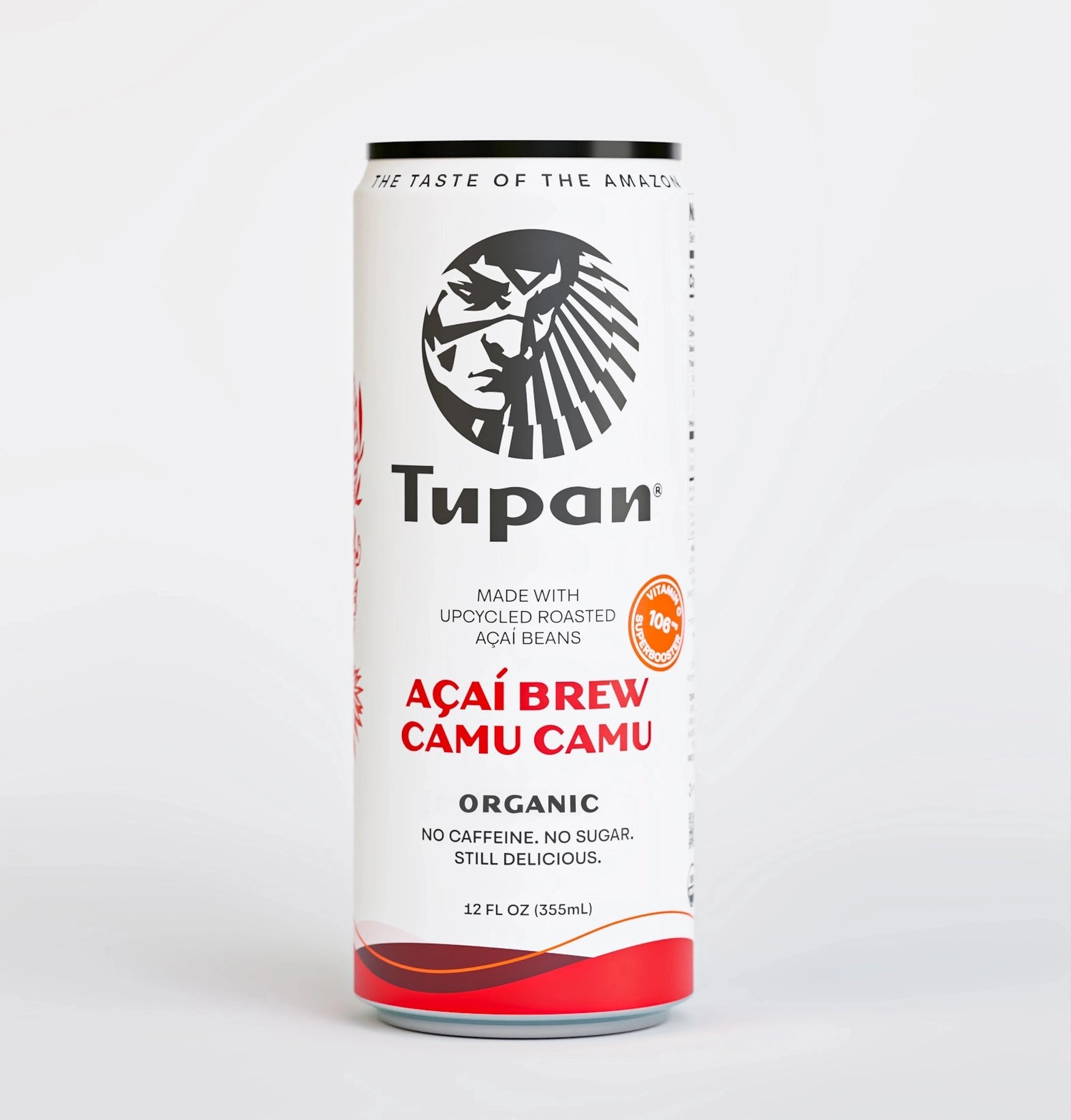
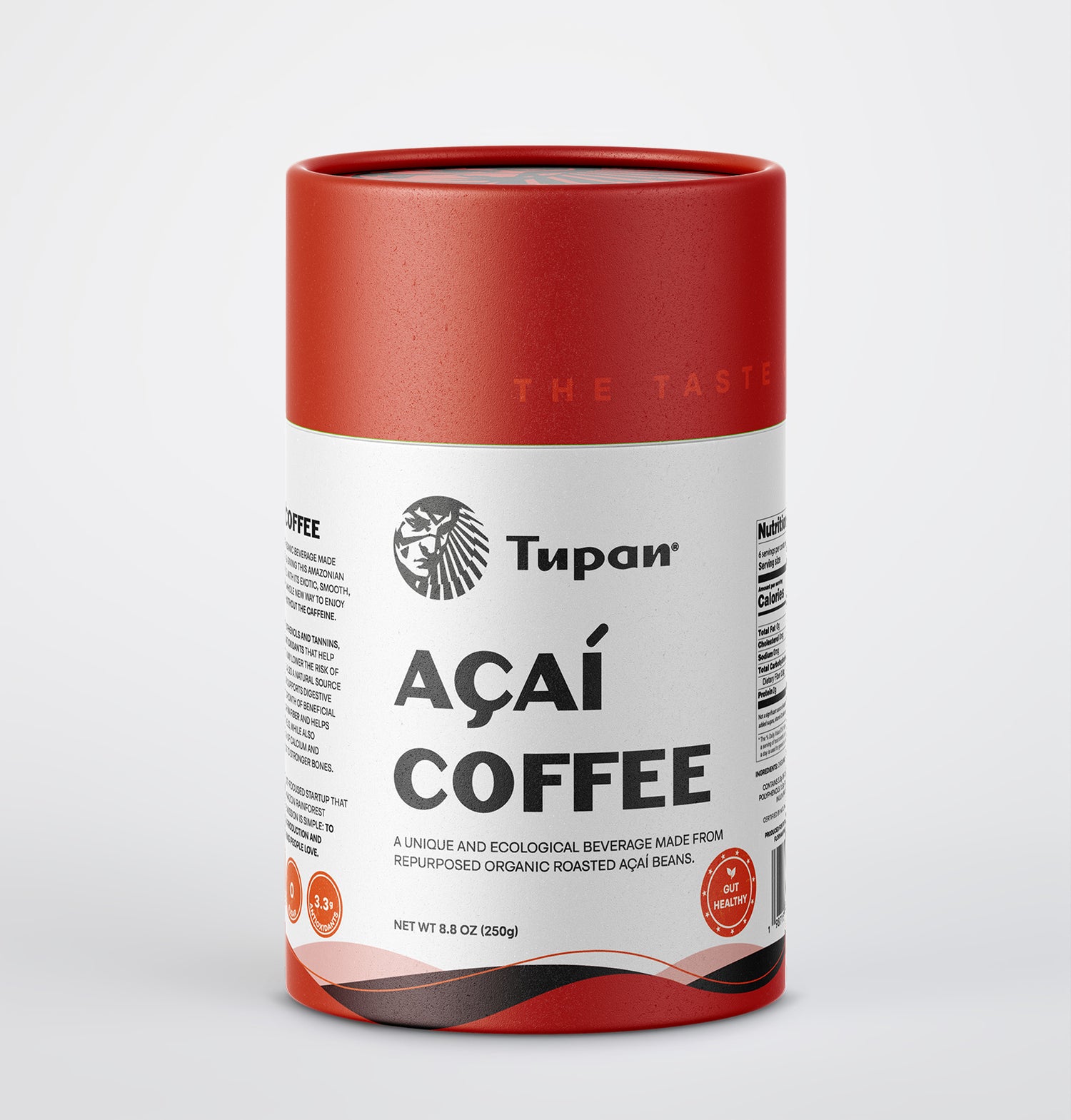
Experimenta el poder de los granos de açaí reciclados.
El auge de los granos de açaí como ingrediente refleja una transformación más amplia en la ciencia de los alimentos.
Estamos pasando de un sistema que desecha a uno que redefine.
Del desecho a la funcionalidad.
De la extracción a la regeneración.
Aquí es donde ocurre la innovación.
No creando algo completamente nuevo.
Sino viendo los recursos existentes de manera diferente.
Los granos de açaí no son solo parte de la fruta.
Son parte de una nueva categoría.
UNA FRUTA, DOS FUTUROS
La historia del açaí ya no se trata solo de la pulpa.
Se trata de la fruta entera.
Dos partes.
Dos funciones.
Dos futuros.
Uno ya conocido.
El otro apenas comienza.
Lo que una vez ignoramos puede convertirse en uno de los ingredientes más importantes del futuro.